How a year-long partnership nurtured connection and exchange, and contributed to capacity-building efforts for civil society organizations and future leaders in one of the world’s youngest democracies

A Partnership Across Continents
Imagine running a nonprofit or innovating to meet important needs in your community with limited access to training, networking, or professional development opportunities, and almost no informational materials in your native language. This is the reality for many current and aspiring civil society leaders in Timor-Leste, a small Southeast Asian nation that gained independence in 2002.
From September 2024 to September 2025, the University of Wisconsin-Madison’s Center for Community and Nonprofit Studies (the “CommNS”) partnered with organizations in Timor-Leste to explore ways to address this gap and to share and exchange about civil society issues across the U.S. and Timorese contexts. The collaborative project also created an opportunity for all involved to learn more about the remarkable strategic efforts happening within communities in Timor-Leste to promote economic development, meet basic needs, educate the next generation, and advocate to support a strong democracy. Funded by the U.S. Embassy in Dili, the project brought together university faculty, nonprofit leaders, and aspiring changemakers from various organizations and career stages, to build skills and forge connections.

Understanding Civil Society: This term refers to the space between government and business where people come together to create positive change—nonprofit organizations, community groups, and volunteer networks. In Timor-Leste, still building its democratic institutions after decades of conflict, a strong civil society sector is essential for community voices to be heard in shaping the future of the country, and for community members’ needs to be met.

Building a Team Across Time Zones
The project united partners from UW-Madison’s Center for Community and Nonprofit Studies (CommNS), FONGTIL (Timor-Leste’s NGO Forum), ETCI (a public university in Ermera), the National University of Timor-Leste (UNTL), and local liaisons. Despite being separated by 13 hours and an ocean, the team met regularly via Zoom—evenings in Wisconsin, mornings in Timor-Leste—to plan workshops and understand local needs.
Rather than assuming what training would help, the team started by listening. They created surveys in Tetun (Timor-Leste’s primary language) and recruited participants through WhatsApp, Facebook, and word-of-mouth. The response was enthusiastic, with dozens applying to participate.
Workshops That Made an Impact
The project delivered both virtual and in-person workshops:
Virtual Sessions (July): Two online workshops introduced 15-20 participants to key concepts including Program Evaluation, Design Thinking, and UN Sustainable Development Goals.
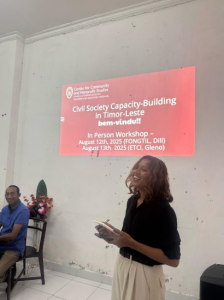
In-Person Workshops (August): When CommNS Executive Director Mary Beth Collins traveled to Timor-Leste, the project came fully to life:
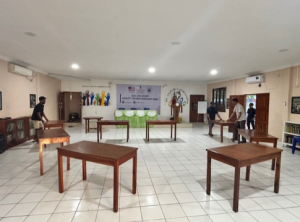
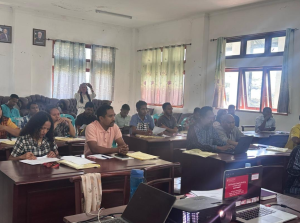
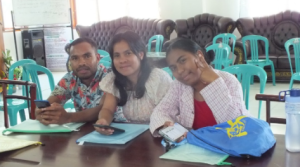
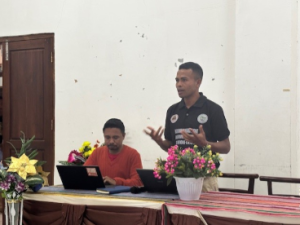
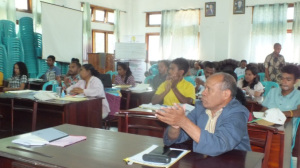
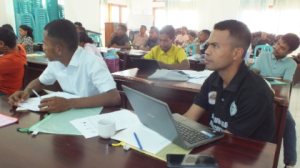
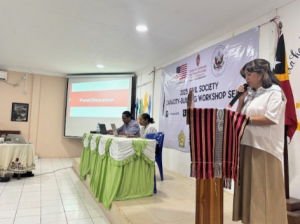
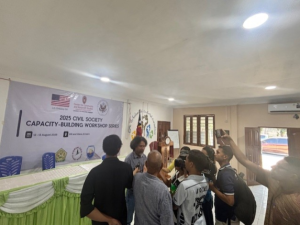
- Dili Workshop – 45 participants from across the country, with local media coverage
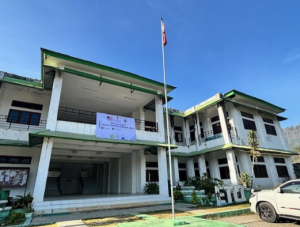
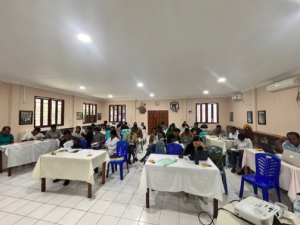
- Ermera Workshop – 21+ participants, including ETCI alumni working in civil society
All workshop sessions were provided in English and Tetun with a professional interpreter.


All workshop materials were provided in both print and digital formats, including a full set of background informational tools and resources which were shared permanently so participants could revisit content as their work in the field continues.

What Participants Said
Post-workshop surveys revealed powerful results:
- 98% found sessions easy to access and understand
- 88% would recommend the workshops to colleagues
Participants valued the clear instruction, practical content, and accessibility. They also requested more interactive components, deeper dives into topics, and expansion to other regions of Timor-Leste.


Looking Forward
The project revealed key opportunities for Timor-Leste’s civil society:
Challenges Identified:
- Most professional development resources aren’t available in Tetun
- Small organizations face organization registration hurdles
- Need for support with digital platforms and media literacy
- Youth are energized about civic participation but need support for building the necessary skills and knowledge for sustainable involvement
Future Directions:
- Expand workshops to more communities beyond Dili and Ermera
- Specialized training on advocacy, sustainable economics and social innovation, and civic health
- Search for ways to support civil society after the retraction of USAID
- Connect Timorese organizations to others within CommNS’s global network for learning exchange with peers
- Create exchange opportunities (knowledge, content, strategies), with institutions of higher education in the U.S. and Timor-Leste serving as key connectors
- Formal partnerships between UW-Madison and Timorese universities

The Power of Partnership, and Looking Ahead
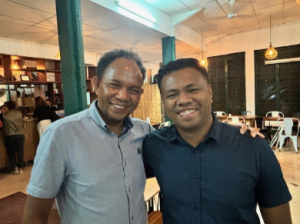
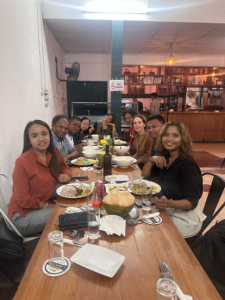
The project’s greatest assets were the relationships and generosity of partners. Through connections formed through a State Department Young Southeast Asian Leaders Initiative (YSEALI) reaching back to 2019, collegial exchanges continued and a broader network was formed to support this project. Through the project work, additional links developed, across institutions and individuals. The goodwill and generosity of our project partners, in hosting Mary Beth Collins as a visiting project partner, in trusting our team to conduct this special project, and remaining flexible with very real challenges including a disruption of funding for several months in early 2025 and various administrative burdens, cannot be overstated. The enthusiastic and gracious support of our U.S. Embassy partners in Dili was also critical.
This project demonstrates how universities can support democratic development globally while offering cross-cultural learning for students and faculty. We hope that the exchanges during the project term were just the beginnings of enduring conversations and collaborations. The project model may also be useful for continued global exchange and network-building with other regions and groups.
As Timor-Leste navigates its future—including new local elections and changing international aid—a strong, skilled civil society sector becomes even more critical. We hope that we can continue to exchange and learn together as that journey continues and as we face our own changing landscape in the U.S., so that we can all nurture the strongest possible civil society approaches for navigating challenges and seizing opportunities for the greater good.

The project was funded by the U.S. Embassy in Dili and implemented by the UW-Madison Center for Community and Nonprofit Studies in partnership with FONGTIL, ETCI, and UNTL. To learn more about CommNS and its global partnerships, visit our webpage.
Hear more from Mary Beth Collins on the Timor-Leste reciprocal exchange program on our YouTube playlist.
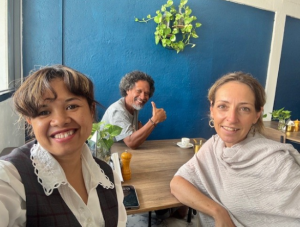
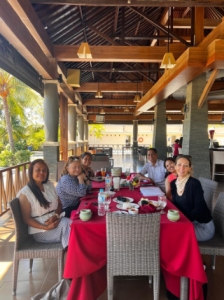
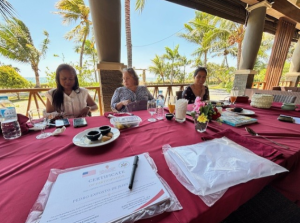
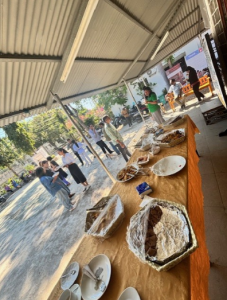
See more photos from the partnership below!